
Easy Painting Ideas for Your First Canvas

You tell yourself you'll start painting once you find the right idea. Then a week passes, then a month, and that blank canvas keeps collecting dust on the shelf. Easy painting ideas are everywhere online, yet somehow none of them feel quite right for a first attempt.
The real barrier isn't the brushes or the paint. It's that moment of staring at a white canvas with absolutely no idea where to begin. The subject feels too ambitious, or too boring, or too complicated to pull off without experience.
That changes today. This guide gives you a set of criteria for picking a beginner-friendly subject, then hands you a few ideas that actually work for someone just starting out. After reading, if you want to learn more, there’s a lot of extra helpful material on our site (and especially the blog) for you to check out.
What Makes a Good First Painting Idea?
Most people jump straight to picking a subject they love, which makes sense emotionally but can backfire quickly. A landscape you adore might involve fifteen different shades of green, complex perspective, and fine detail work that frustrates even intermediate painters. First, picking a subject with the right characteristics makes the whole experience far more enjoyable.
-
Simple composition. One focal point, minimal background, and shapes you can block in confidently without needing precision you haven't built yet.
-
Limited color palette. Two to three colors, or even a monochrome palette, let you focus on form and technique rather than color theory.
-
Small canvas size. Less surface area means fewer decisions and a finished piece you can realistically complete in a single sitting.
-
Forgiving medium. Easy acrylic painting ideas dominate beginner recommendations because acrylics dry fast, layer well, and cleaning acrylic paint brushes takes minutes compared to oils.
None of these criteria boxes you in. They just stack the odds in your favor while you find your footing.
Easy Painting Ideas to Try Right Now
These easy canvas painting ideas cover a range of styles, so there's something here regardless of whether you lean toward abstract, natural, or geometric subjects. Pick whichever one pulls at you first and go with it.
Sunset Silhouettes

Few subjects reward beginners as generously as a sunset silhouette. The sky does the heavy lifting visually, and the silhouette itself, whether a tree line, a lone figure, or a row of rooftops, gets painted in solid black over the top. You lay down your sky colors wet-on-wet from top to bottom, let them merge naturally, then wait before adding the silhouette. The result looks polished without demanding much technical skill, which makes it one of the most satisfying and easy painting ideas for a first attempt.
On the criteria front, this one checks every box we previously outlined. The composition centers on a single horizon line with one focal element. You need at most three colors for the sky, plus black for the silhouette. A small canvas handles this subject perfectly, and acrylics make the wet-on-wet blending easy to control without the long drying times of oils.
Abstract Color Blending

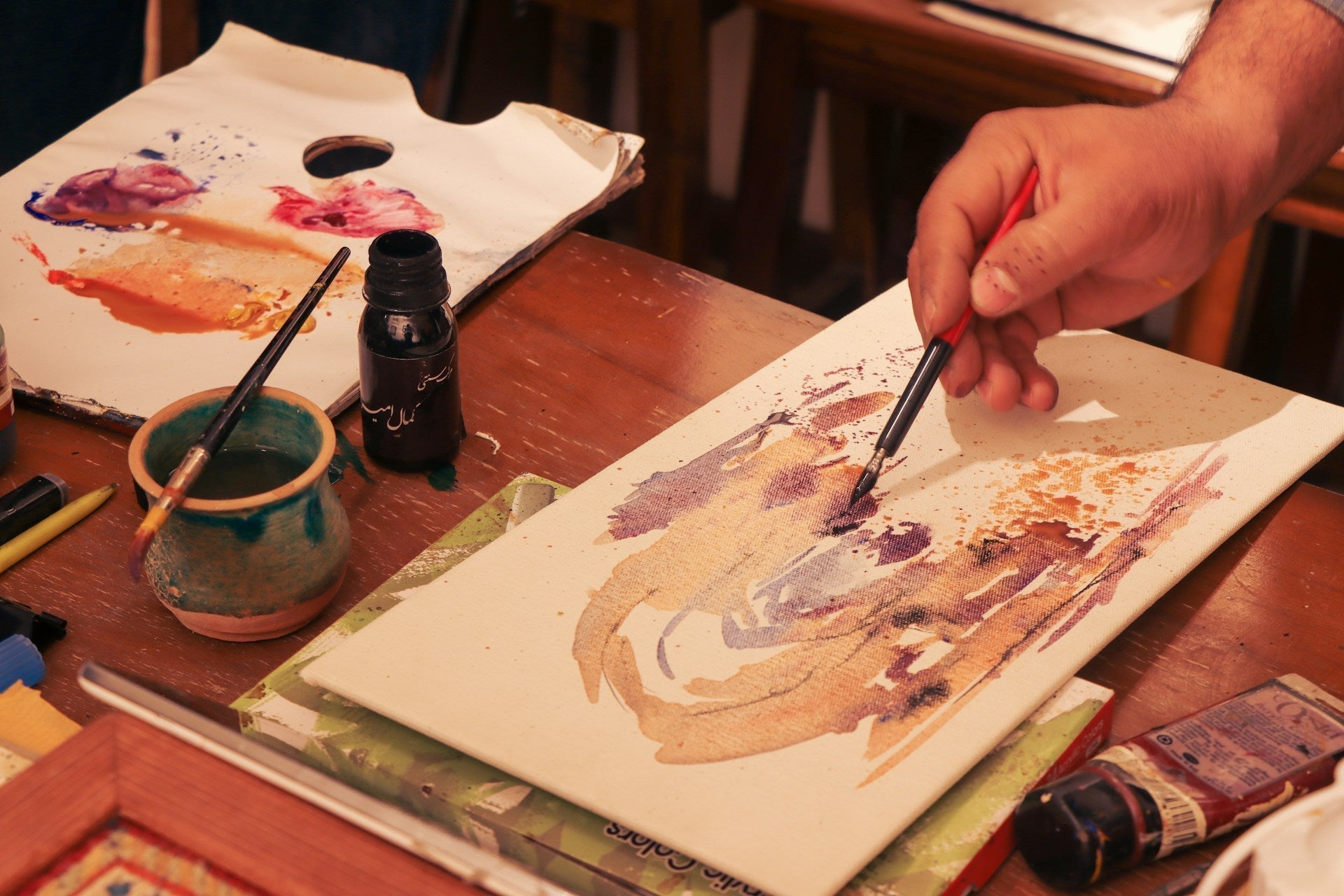
Abstract work is the most forgiving entry point on this entire list. There's no subject to get wrong, no proportions to stress over, and no reference photo to fall short of. You pick two or three colors that work well together, apply them in loose overlapping strokes, and let the canvas tell you when it's done. A small canvas, acrylics, and a two-color palette are genuinely all you need, and the results tend to look far more intentional than the process feels.
Composition is entirely open, so simplicity is built in by default. A monochrome or two-color palette works beautifully for abstract work. Canvas size is flexible, and acrylics suit the loose, layered approach this style calls for better than any other medium.
Simple Floral Stems

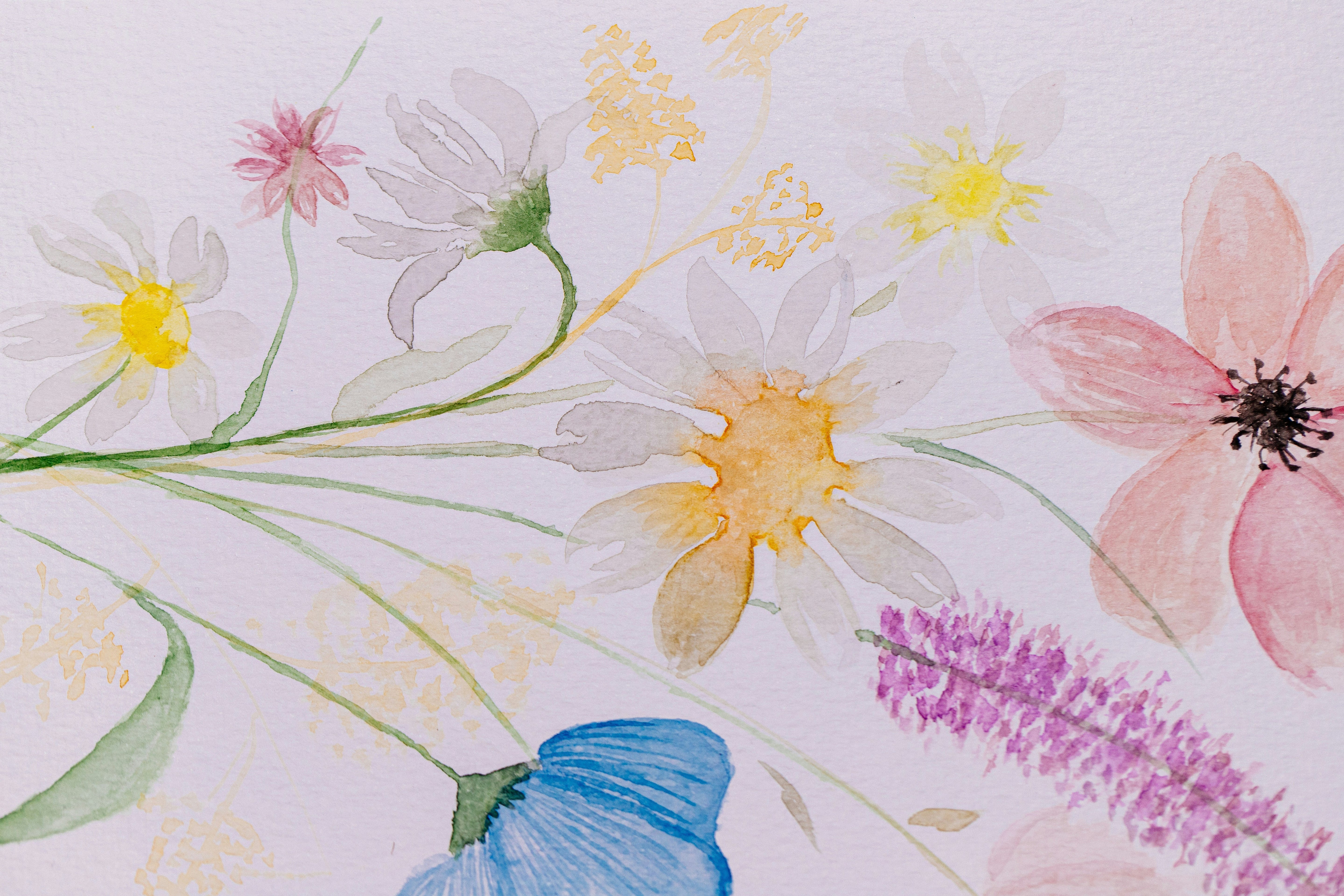
A single flower stem against a plain background sounds almost too simple, but that's exactly the point. You're not painting a garden, just one poppy, one tulip, or one daisy with a clean backdrop behind it. The shape is forgiving, the color options are wide open, and the composition practically arranges itself. This sits comfortably among cute and easy painting ideas because the subject is naturally appealing and doesn't require any artistic shortcuts to look good.
One stem against a flat background keeps the composition clean and uncluttered. You can work with as few as two colors if you keep the flower and background tones close. A small canvas suits a single stem naturally, and acrylics give you enough control over petal shapes without demanding the precision of a finer medium.
Geometric Shapes

Geometry gives beginners something most other subjects don't: clear, defined edges to work within. Triangles, circles, and rectangles arranged across a canvas create visual interest through pattern and color contrast rather than technical skill. You can tape off sections with painter's tape for crisp lines, fill each shape with a flat color, and peel the tape back to reveal something that looks deliberate and clean. Easy painting ideas for beginners rarely feel this satisfying relative to the effort involved.
Geometric work is about as beginner-friendly as it gets. The composition stays simple by design, and the tape does most of the structural work for you. A limited palette of two or three colors creates strong contrast without overcomplicating the session. Small canvases work particularly well here, and flat acrylic coverage over taped sections is one of the cleanest techniques the medium offers.
Moon and Night Sky

A dark background with a single bright moon is one of those compositions that looks complex from a distance but breaks down into just a few steps up close. You start with a deep navy or black base, add some soft cloud texture with a dry brush, and finish with a clean white or yellow circle for the moon. The dark palette keeps the whole piece focused, and the subject has a natural visual payoff that makes it genuinely rewarding to finish. You can frame a canvas like this easily once it's dry, and it tends to look striking on a wall.
The criteria we previously set up hold up well here, too. A single moon against a dark sky is about as simple a composition as you'll find. The palette leans almost monochrome, with navy, black, and one highlight color covering everything you need. A small canvas suits the subject without losing any of its impact, and acrylics handle both the flat base coat and the dry-brush cloud texture without any fuss.
Mountain Landscape

Mountains work well for beginners because the shapes are essentially large triangles softened at the edges. You lay down a sky, add one or two mountain silhouettes in progressively lighter shades to suggest depth, and stop there. Easy canvas painting ideas built around landscapes often overwhelm first-timers with too much detail, but mountains strip that problem away entirely. The subject reads clearly at any skill level, and the layering technique you practice here transfers directly to almost every other landscape subject you'll try later.
As for the reasons to try it out, mountains perform solidly across the board. The composition focuses on two or three overlapping shapes, with a simple sky above. The limited shading approach means you only need one base color that you progressively lighten, which keeps the palette tight. A small canvas handles the subject without losing the sense of scale, and layering acrylic washes for depth is one of the medium's strongest suits.
A Few Things To Know Before You Start
The ideas above will get you started, but a handful of small habits separate a frustrating first session from one you actually want to repeat. None of these takes long to learn, and most of them you'll wish someone had mentioned earlier.
Before you paint:
-
Squeeze out more paint than you think you need. Acrylic paint dries fast on the palette, and running out mid-stroke is genuinely annoying.
-
Tape down your canvas or prop it at a slight angle. A canvas that slides around while you work breaks your focus more than you'd expect.
-
Have a reference image ready. Even abstract painters benefit from a loose visual anchor. Pull something up on your phone and keep it nearby.
-
Fill a large cup with water and keep a rag close. Brush maintenance mid-session keeps your colors clean and your strokes predictable.
While you paint:
-
Work from background to foreground. Lay down your largest areas of color first and build detail on top. This applies to every single idea on this list.
-
Step back every few minutes. Your eyes adjust to what's in front of them, and distance gives you an honest read on how the piece is actually coming together.
-
Don't overwork a section. Acrylics forgive a lot, but scrubbing a wet area repeatedly muddies the color fast. Let a layer dry and come back to it.
-
Resist the urge to fix everything at once. Easy painting ideas for beginners go sideways most often not from lack of skill but from impatience. Slow down.
One more thing worth saying plainly: your first canvas will not be perfect, and it doesn't need to be. The point is to finish it, learn something from it, and pick up the brush again.
Start Small, Start Today
Six ideas, one canvas, and whatever paint you have on hand. That's the whole setup.
Pick the idea that pulled at you first, not the one that seems most impressive or most achievable, just the one you actually want to look at when it's done. Set up your space, put on something to listen to, and commit to finishing it regardless of how the first twenty minutes go.
When you're done, come back. Our blog has guides on specific techniques, deeper dives into each of these subjects, and plenty of next steps for when a single stem or a sunset silhouette starts to feel too easy. And if you'd rather have a structured starting point with everything included, our paint-by-number kits are worth a look. They're designed exactly for the moment you're in right now.
The canvas on your shelf has waited long enough.
Frequently Asked Questions (FAQ):
1. What are the easiest painting ideas for absolute beginners?
Sunset silhouettes, abstract color blending, and geometric shapes consistently work best for first-timers. They all share the same qualities: simple composition, limited color requirements, and enough room for error that a mistake doesn't ruin the piece. Any of the easy painting ideas for beginners on this list will serve you well as a starting point.
2. Do I need expensive supplies to start painting?
Not at all. A basic set of acrylic paints, two or three brushes, and a small canvas are genuinely all you need for a first session. Expensive supplies don't make better paintings. Finished canvases do.
3. What size canvas should a beginner start with?
Somewhere between 8x10 and 11x14 inches hits the sweet spot. Small enough to feel manageable, large enough to give your brushstrokes some room to breathe. Easy canvas painting ideas tend to shine on smaller formats anyway, so don't feel pressured to go big early on.
4. Is acrylic paint better than oil for beginners?
For most people starting out, yes. Acrylics dry fast, mix easily, and clean up with water. They also let you paint in layers without long waits between sessions, which keeps momentum going when you're still figuring things out.
5. What if my first painting doesn't turn out well?
It probably won't, and that's completely fine. Every painter has a stack of early work they'd rather forget. The value of that first canvas isn't the result; it's what you notice while making it. Pick a cute and easy painting idea, finish the piece no matter what, and use whatever you learned to make the next one better.