
Artículo: The Science of Art Therapy: How Painting Reduces Stress
The Science of Art Therapy: How Painting Reduces Stress

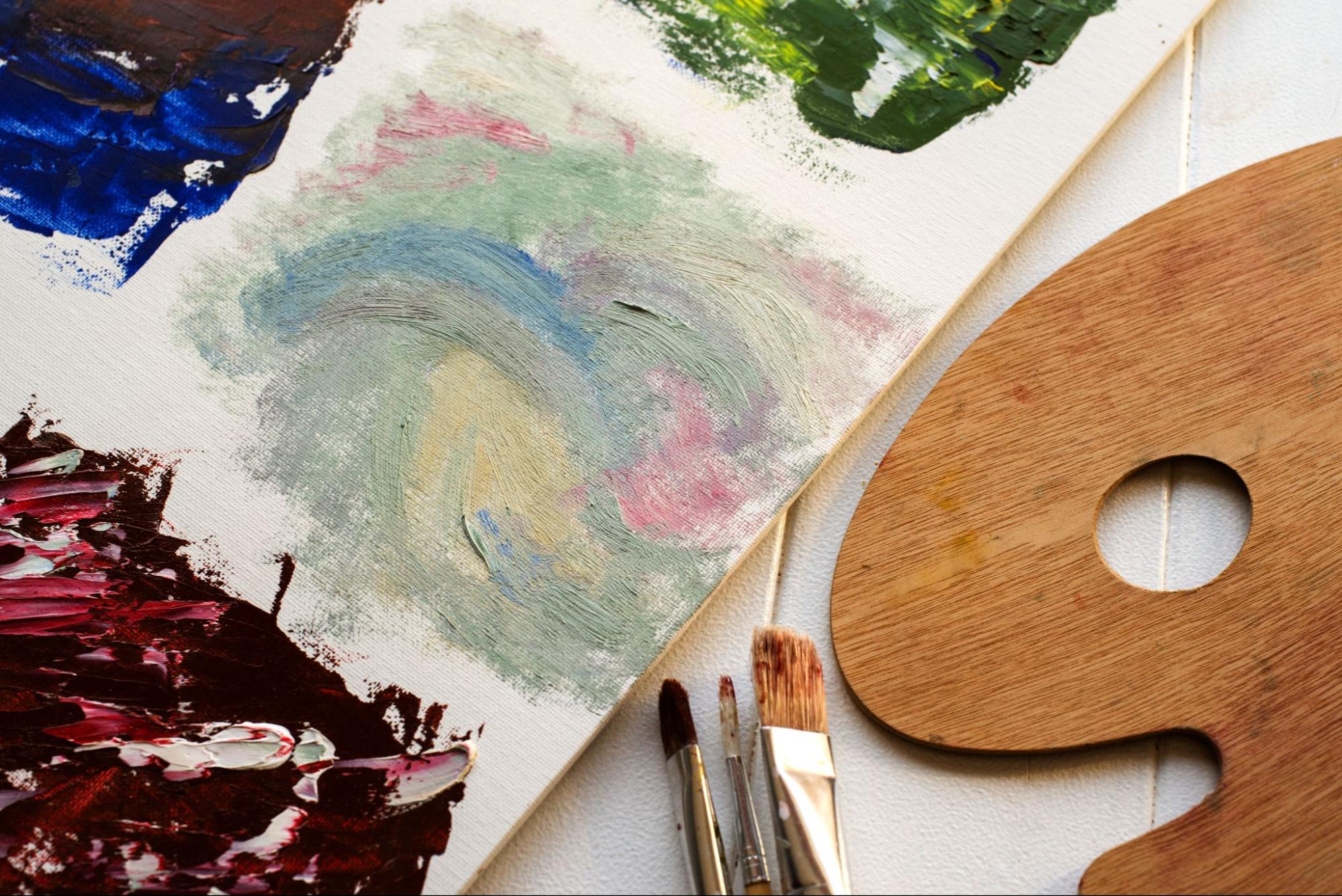
Image source: Magnific
Picking up a brush feels good. Most people know that already, without needing a study to confirm it. What's newer is a stack of research measuring what that good feeling actually does inside the body, down to the hormone level, and some of the numbers involved are large enough to change how you think about a Sunday afternoon spent painting.
Art therapy has moved out of the "nice but unproven" category. Hospitals, universities, and psychiatry departments now test it with saliva samples, blood markers, and brain scans, not just mood questionnaires. The numbers that come out of that research are specific, and in several cases, surprisingly large.
Below, we'll take a closer look at the studies behind these findings, what they reveal about the effects of painting on the mind and body, and how you can put those insights into practice yourself, even if you've never painted before.
75% of Adults Show Lower Cortisol After 45 Minutes of Art Making
We've written before about how creative hobbies lower cortisol, but the Kaimal study is worth pulling apart in more detail because it’s evidence for a substantial cortisol drop in majority of the participants. Three out of four people reported feeling happier in just 45 minutes, and it happened regardless of skill level. People who had never picked up a paintbrush in their adult lives got the same benefit as those who painted every week. Kaimal later said the result wasn't entirely surprising, since it lines up with a basic premise of art therapy: everyone can be creative in the right setting. What did surprise her was that prior experience made no real difference to the size of the effect.
Written reflections collected after the session backed up the biology. One participant wrote that after about five minutes, they felt less anxious and stopped obsessing over unfinished tasks. Five minutes is fast. That's not a slow-building benefit that shows up after weeks of practice — it's closer to what you'd expect from a short walk or a few deep breaths, except with a larger measured effect.
Not everyone responded the same way. Roughly a quarter of participants saw cortisol hold steady or rise slightly, and the researchers noted that a small amount of cortisol is a normal part of being engaged and alert, not automatically a bad sign. Still, three out of four is a strong enough pattern.
Viewing Original Art Cuts Cortisol by 22%
 Image source: Pexels
Making your own art isn't the only version of this. Just looking at the right kind of art does something too, and a 2025 study from King's College London put an exact figure on it.
Fifty volunteers, ages 18 to 40, spent time with original paintings by famous painters Manet, Van Gogh, and Gauguin at The Courtauld Gallery in London. A separate group looked at reproductions of the exact same paintings, in a plain room with none of the gallery atmosphere. Everyone wore sensors tracking heart rate and skin temperature, and gave saliva before and after.
Cortisol fell by an average of 22 percent in the group viewing original artwork, compared with only 8 percent among those looking at reproductions. Nearly three times the effect, from the same image, just because one version was a real painting and the other a copy. That gap is the part worth sitting with. Whatever is happening physiologically, it isn't purely about the visual content. There's something about presence, scale, or authenticity that the body picks up on even when the eyes see nearly the same thing twice.
Lead researcher Dr. Tony Woods called the finding unusual for another reason: the effect wasn't limited to cortisol. It touched three different body systems at once, and reached further than most people would expect from a museum visit.
Inflammation Markers Fall by Nearly a Third After One Gallery Visit
The same King's College London study also tracked inflammation, since chronic stress and inflammation tend to move together over time.
Two proinflammatory proteins, IL-6 and TNF-alpha, dropped by 30 percent and 28 percent in the group that viewed original art. The reproduction group showed no change on either marker. Zero. A sharper contrast than the cortisol numbers alone suggest, and it points to something beyond a passing mood boost.
IL-6 and TNF-alpha aren't obscure lab values. They're linked to heart disease, diabetes, depression, and a long list of chronic conditions when they stay elevated for too long. A single 20-minute museum visit isn't going to undo years of chronic inflammation on its own, nobody involved in the study claimed that. But watching two separate markers move in a healthy direction, in real time, from looking at paintings, is not a small finding. It's one reason researchers described the study as evidence that art affects the immune, endocrine, and autonomic nervous systems simultaneously, something they hadn't expected going in.
Why does looking at real paint on real canvas do more than looking at a copy? Brain imaging offers a partial answer. Research using fMRI has found that paintings people rate as deeply moving activate regions of the default mode network, the part of the brain tied to self-reflection rather than outward tasks. That's a pattern usually reserved for thinking about your own life, not for looking at an object on a wall. It suggests the brain isn't just processing color and composition when a painting lands. It's treating the experience as personal.
69% of Cancer Patients Report Reduced Anxiety Through Art Therapy
Some of the clearest clinical evidence for art therapy comes from cancer centers, where anxiety is common and standard talk therapy can be hard to sustain through fatigue, nausea, and long treatment schedules.
A 2013 review in JAMA Internal Medicine, pooling 27 clinical trials with more than 1,500 cancer patients, found that creative arts therapies produced a significant reduction in anxiety during treatment. That tracks with what shows up in the academic literature too. A meta-analysis covering twelve studies and 587 cancer patients found that art therapy reduced anxiety, depression, and fatigue, while improving overall quality of life across the board. A separate review focused specifically on women with breast cancer found an even larger anxiety reduction, describing the effect size as large and consistent across the studies included.
Why does painting reach cancer patients so effectively? Part of it is likely the non-verbal nature of the process. Talking about a diagnosis requires finding language for something that often defies language. Painting doesn't. A patient can put a feeling into color or shape long before they're ready to say it out loud, or without ever needing to say it at all.
Severe Anxiety in Hospitalized Children Drops From 90% to 27% After a Single Session
 Image source: Magnific
Children facing invasive medical procedures show one of the sharpest before-and-after contrasts in the entire body of art therapy research.
Researchers studying kids undergoing procedures like IV placement and blood draws measured pain and anxiety before and after a short, structured art therapy session. Severe anxiety affected 90.2 percent of children before the session and fell to 26.8 percent afterward. Severe pain dropped almost as sharply, from 97.6 percent down to 12.2 percent. Those are not subtle shifts. Most kids moved out of the "severe" category entirely, in a single sitting, without medication.
The researchers linked part of the effect to how art gives children a way to process fear without needing the vocabulary for it, which matters more with kids than almost any other population. A five-year-old can't always explain why a needle terrifies them. They can scribble it, color it, or shape it in clay instead, and that act alone appears to lower both the pain they report and the physical anxiety response measured around it.
Strangers Could See a Veteran's Recovery Just by Looking at Their Painted Mask
A 2024 study published in Scientific Reports set up a simple test. Take art made early in a course of art therapy, take art made at the end of it, then hand both to people who have no idea which is which. See if a stranger can tell the difference just by looking.
Five service members and veterans with post-traumatic stress symptoms went through an eight-session art therapy protocol at the National Intrepid Center of Excellence. Early on and again near the end, each participant painted a plain papier-mâché mask however they wanted, using paint, clay, and whatever else caught their eye. Researchers then showed all ten finished masks to 203 blinded viewers who had no idea which mask came from which stage of treatment, and asked them to rate the emotions each piece conveyed.
The viewers got it right without being told anything. Masks from the early sessions were rated as noticeably angrier, more upsetting, and more emotionally challenging. Masks from the final sessions came across as calmer and more pleasurable to look at, and viewers also found them more beautiful and said they liked them more. None of these raters knew a diagnosis was involved. They weren't shown before-and-after photos of the participants or told a story about recovery. They just looked at painted objects and picked up on a shift that the participants themselves may not have been able to put into words.
It’s a different kind of evidence than a symptom checklist. It suggests the emotional change happening inside someone during art therapy doesn't stay hidden. It shows up in the brushwork, the color choices, and the texture of the piece itself, clearly enough that a complete stranger can read it. The researchers pointed to this as one of the more compelling arguments for art therapy as a treatment option: it gives people a way to work through something they can't yet say out loud, and the progress becomes visible anyway.
Why You Should Consider Painting the Next Time You're Stressed
Every study above points to the same conclusion from a different angle. Cortisol drops. Inflammation markers fall. Anxiety scores that start in the "severe" range end up "mild" in a single sitting. That's a wider spread of evidence than most stress-relief habits can claim, and it holds whether you're making the art yourself or just standing in front of someone else's.
Accessibility is part of the case too. None of the interventions above required a diagnosis, an art degree, or even a full hour. A 45-minute session with markers and paper produced measurable change. A 20-minute museum visit did the same. This poses a low bar for something backed by this much research, and it's a big reason art therapists keep pointing to painting as one of the easiest entry points into managing chronic stress.
There's also the fact that painting doesn't compete with rest the way other stress-relief habits sometimes do. It's easy to start painting, even when you're feeling physically or mentally drained. You can do it seated, in silence, with sore muscles or a foggy head, and the research still shows a benefit. Low effort paired with a measurable payoff is rare enough on its own to be worth trying.
How to Try Art Therapy Yourself
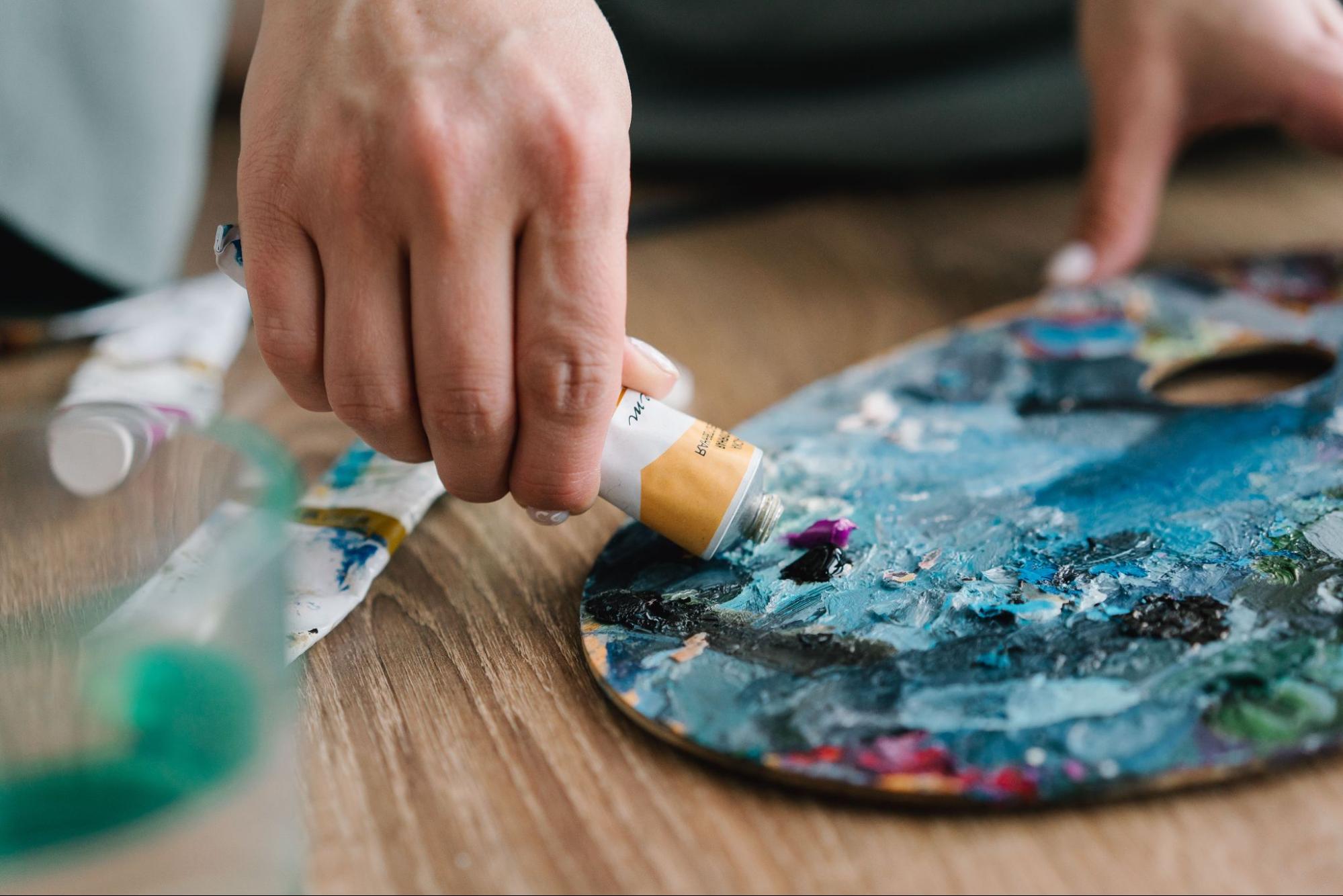
 Image source: Magnific
Getting started doesn't require finding a therapist or clearing a weekend. Most of the studies above used setups anyone could recreate at home, with materials most people already have lying around.
-
Set aside 30 to 45 minutes with no plan. That's the window from the Kaimal study, and it seems to be enough time for the body to register a shift. Skip the sketch, skip the reference photo. Free-form work without a goal produced the cortisol drop in the research, and trying to make something "good" tends to bring back the exact pressure the activity is supposed to relieve.
-
Reach for whatever is on hand. Paint, markers, colored pencils, modeling clay, scraps for a collage. The material mattered far less across these studies than the act of engaging with it at all.
-
Visit a gallery when you can. The King's College London research found a real gap between looking at original paintings and looking at reproductions, so a trip to your local museum or gallery can be well worth it. It doesn't have to be the Louvre to have a meaningful impact.
-
Make it a habit, not a one-off. A single session helped in nearly every study here, but the anxiety research in cancer and pediatric care involved repeated sessions spread across weeks. Consistency seems to matter as much as any single visit.
-
Loop in a professional for anything heavier than everyday stress. Grief, illness, and trauma respond well to structured art therapy, and a licensed art therapist brings a level of safety and guidance a solo sketchbook can't.
You don't need to be an artist to benefit. The Drexel study found that cortisol levels fell regardless of participants' previous experience with art. What matters most is taking part in the creative process.
The Bottom Line
The growing body of research around art therapy suggests that painting offers far more than a creative outlet. Spending time making or experiencing art has been linked to healthier stress responses, improved emotional well-being, and a greater sense of calm across a wide range of people and situations. It’s an encouraging reminder that activities we enjoy can also support our overall health.
You don't have to paint masterpieces or invest in expensive supplies to experience those benefits. What matters most is making creativity a regular part of your life instead of something you save for special occasions. Whether you spend half an hour with a canvas at home or visit a local gallery every few weeks, giving yourself permission to engage with art can become a simple habit that supports both your mental and physical well-being over time.
Frequently Asked Questions (FAQs):
-
What is art therapy?
Art therapy is a form of mental health treatment that uses creative activities such as painting, drawing, or sculpting to help people express emotions, manage stress, and improve psychological well-being. It is guided by a licensed art therapist and can be beneficial for people of all ages.
-
Does painting really help reduce stress?
Yes. Research consistently shows that painting and other forms of creative expression can help lower the body's stress response and promote a greater sense of relaxation.
-
Do I need to be good at painting to experience the benefits?
No. The mental and physical benefits associated with painting are not limited to skilled artists, making it an accessible activity for beginners.
-
How long should I paint to feel more relaxed?
Even a short session of around 30 to 45 minutes can be enough for many people to notice a shift in how they feel, though regular practice may provide greater long-term benefits.
-
Is looking at art as beneficial as creating it?
Both can be beneficial, although they work in slightly different ways. Spending time viewing original artwork has also been associated with positive effects on stress and well-being.